Disability Insurance Explained — Income Protection Basics
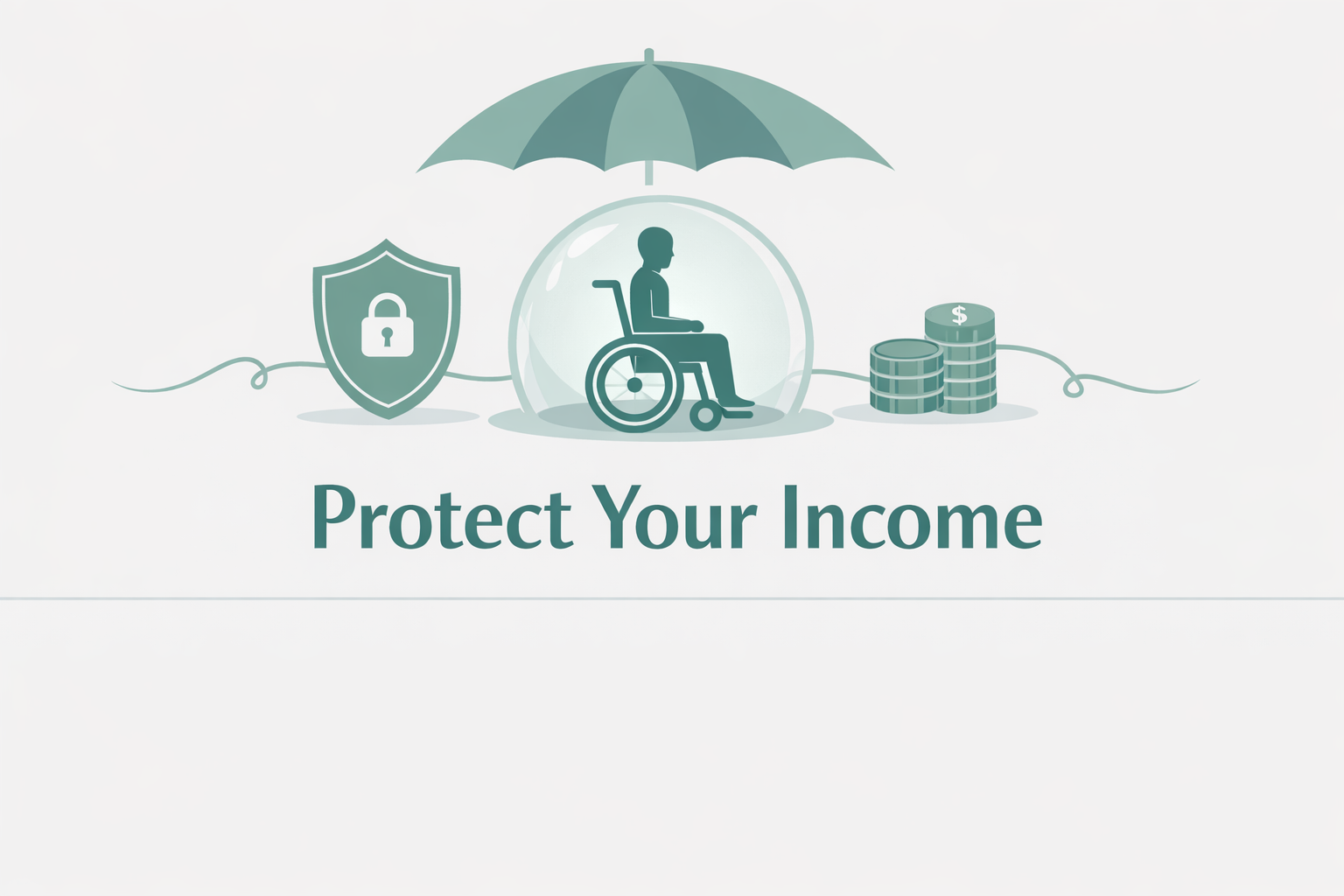
1. What Disability Insurance Really Covers
Disability insurance replaces a portion of your income if you can’t work due to illness or injury. It doesn’t pay medical bills. It doesn’t cover job loss. Its single purpose is simple: keep money coming in when your ability to earn stops.
Most policies replace 50–70% of your gross income. That range exists because benefits are usually tax-free when premiums are paid with after-tax dollars. The goal isn’t to make you richer—it’s to keep your lifestyle stable.
2. Why Income Loss Is the Real Risk
People insure homes, cars, and phones—but forget that income funds everything else. According to industry data, the odds of a long-term disability before retirement are significantly higher than the odds of early death.
The danger isn’t just permanent disability. It’s temporary inability to work: surgery recovery, chronic illness flare-ups, mental health conditions, or complications that last months. Savings evaporate quickly when income stops but expenses don’t.
3. Short-Term vs Long-Term Disability Insurance
Disability insurance comes in two main forms:
- Short-Term Disability (STD): Covers weeks to a few months.
- Long-Term Disability (LTD): Covers years or even until retirement age.
STD is often employer-provided and bridges the gap after sick leave. LTD is where true protection lives—it’s what prevents permanent financial derailment. If you must choose one, LTD is usually the priority.
4. How Benefits Are Calculated
Benefits are based on pre-disability income, capped by the insurer. High earners often discover that employer plans cover only a fraction of their real income, making supplemental individual policies valuable.
Waiting periods matter. A 90-day elimination period is common. Shorter waits cost more but protect those with limited savings.
5. Key Policy Definitions That Matter
The most important phrase in disability insurance is how it defines “disabled.”
- Own-occupation: You can’t perform your specific job.
- Any-occupation: You can’t perform any reasonable job.
Own-occupation coverage is stronger and more expensive—but critical for professionals. Any-occupation definitions can dramatically limit claims.
6. Who Needs Disability Insurance Most
• Self-employed & freelancers
• Single-income households
• High earners with capped employer benefits
• Professionals relying on specialized skills
7. Buying Checklist: Avoid These Mistakes
- Confirm own-occupation vs any-occupation wording
- Check benefit caps and inflation riders
- Match waiting period to emergency savings
- Review mental health & partial disability clauses
Looking for a broader overview? This guide belongs to the Critical Illness & Income Protection Hub, where related articles are organized for easy comparison.
View the full hub →If your income supports your lifestyle, yes. Savings alone rarely cover long-term income loss.
Q2) Isn’t workers’ compensation enough?
No. Workers’ comp only covers job-related injuries, which represent a small share of disabilities.
Q3) Are benefits taxable?
If you pay premiums with after-tax dollars, benefits are typically tax-free.
disability insurance explained, income protection insurance, own occupation disability, long term disability benefits, disability claim denied, self employed disability insurance, elimination period, benefit cap
'Smart Insurance' 카테고리의 다른 글
| 💉 Critical Illness & Income Protection Hub — Plan Ahead (0) | 2026.02.01 |
|---|---|
| Short-Term vs Long-Term Disability Insurance — What Actually Protects You? (0) | 2026.02.01 |
| Critical Illness Insurance — Is It Worth It? (0) | 2026.01.31 |
| 🏥Health & Life Insurance Hub — Essentials for Security (0) | 2026.01.30 |
| Health Insurance Deductibles Explained — How Much Should You Choose? (1) | 2026.01.29 |


